
"Bolivia coffee production"
600 article(s) found
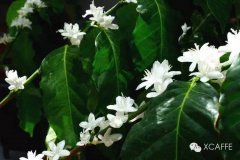
Bolivia, located near Brazil, the largest coffee producer in South America, is still an underrepresented country.
Bolivia, located near Brazil, South America's largest coffee producer, is still a place unknown to many coffee lovers. But the country is famous for producing high-quality coffee and has good conditions for coffee cultivation and production as well as Brazil. Bolivian raw beans are large and uniform in size, and the green ones are high-quality raw beans. The majority of Bolivian coffee varieties are Cadura.

Introduction to boutique coffee with obvious rich flavor and taste characteristics of Bolivian coffee manor
In 1863, rich saltpetre deposits were discovered in Atacama province along the Pacific coast. In 1879, Chile sent troops to occupy the mining area, and Bolivia joined forces with Peru to wage the Pacific War with Chile. Bolivia was defeated in 1883 and ceded the saltpeter-rich Pacific coast to Chile in 1904. Bolivia lost its only coastal province, including the important port of Antofagasta, from

Introduction to the varieties and characteristics of coffee flavor and taste in Xuemai Manor, Bolivia
On December 18, 2005, the presidential election was held. Aymara Indian, Evo Morales, leader of the Bolivian socialist movement, won the election with 53.75% of the vote and took office on January 22, 2006. He became the country's first Native American president and Bolivia's first left-wing president. Began with progressive community socialism (that is, Indian socialism)

Introduction of high-quality coffee with bitter taste in Bolivian coffee manor
Bolivia was rescued from independence by Bolivar, a national hero from Caracas, Venezuela, during the War of Independence in Latin America in the 18th century, so the country was named after him. August 6, 1825 declared independence from Spain, named the Bolivarian Republic, and then changed to the present name Bolivia and Paraguay broke out in 1932 for oil resources in the North Chaco region.

Six major producing areas in Bolivia introduce Pro-Agro coffee cooperative in detail
The coffee growing areas of Bolivia (Bolivia) include Yungas, Santa Cruz, Beni, Cochabamba, Tarija, Pando, etc., but the vast majority (95%) are produced by Yungas. The local government expropriated land from big landlords and redivided it into 1-8 hectares and distributed it to coffee farmers, who produced about 8% of Bolivia's coffee.

Does Bolivian coffee taste good? the method of making Bolivian coffee
The exchange of professional baristas please pay attention to the coffee workshop (Wechat official account cafe_style) varieties: iron card producer: Cabana small farmer flavor: roasted nuts and almonds, oranges and pomelos are rich in coffee beans in South America, and Bolivia is no exception. The unique tropical rain forest environment in parts of Bolivia provides excellent natural conditions for the growth of organic coffee.

Bolivian flavor describes which brand of Bolivian coffee is good.
Professional baristas Please pay attention to the Coffee Workshop (Wechat official account cafe_style) most of the coffee in Bolivia used to be of mediocre quality, but in recent years the production of boutique coffee has developed rapidly and there have been a lot of pretty good beans. In recent years, the COE (Cup of excellence) system, which was first implemented in Brazil, has gradually become popular, and Bolivia has also introduced this system.

Introduction of high-quality coffee with rich and unique aroma in Bolivian coffee manor
In 1932, the Chaco War broke out between Bolivia and Paraguay for oil resources in the North Chaco region. Bolivia was defeated and lost a large area of territory. The people's armed uprising broke out in April 1952, and Paisdensolo, leader of the nationalist revolutionary movement, became president. Since then, there have been frequent military coups and long-term political instability. Modern assets with South American characteristics were restored in October 1983

Introduction to boutique coffee with rich and unique aroma and taste characteristics of Bolivian snow vein manor
In 1932, the Chaco War broke out between Bolivia and Paraguay for oil resources in the North Chaco region. Bolivia was defeated and lost a large area of territory. The people's armed uprising broke out in April 1952, and Paisdensolo, leader of the nationalist revolutionary movement, became president. Since then, there have been frequent military coups and long-term political instability. Modern assets with South American characteristics were restored in October 1983

A brief introduction to the planting market price of high-grade vanilla sweet Bolivian boutique coffee beans
The eastern and central part belongs to the savanna climate, the transition from the western mountain to the subtropical climate, and the inland plateau to the mountain climate. The climate in most areas is dry and cool; the annual precipitation decreases from 2000 mm to less than 100mm from northeast to west. [7] Natural resources are rich in mineral resources, including tin, antimony, tungsten, silver, zinc, lead, copper, nickel, iron, gold and so on. Abundant mineral deposits

Bolivia's Lake Titicaca tapping small farmers wash iron Pica boutique coffee bean varieties planting market price
Variety: iron pickup producer: tapper Gabbana small farmer flavor: dry aroma of roasted nuts and almonds, oranges and white pomelo are rich in coffee beans in South America, Bolivia is no exception, parts of Bolivia have a unique tropical rain forest environment, it provides excellent natural conditions for the growth of organic coffee. The aroma of Bolivian coffee is rich and unique, whether it is the aroma of ground beans or

Introduction to the Flavor and Taste of Fine Coffee in Snow vein Manor of Bolivia
The legal capital, the seat of the Supreme Court, with a population of 284000, 2790 meters above sea level. Founded in 1538, the city was formerly known as Chuquisaka. The city witnessed the first uprising in South America against Spanish rule in 1809. Bolivia declared its independence here in 1825 and became the capital in 1826. In 1839, it was renamed Sucre to commemorate the second president of Bolivia, General Antonio Jos é Sucre.

Bolivian Coffee Bean Brand recommends the introduction of coffee beans in Bolivia's Archangel Manor.
Professional coffee knowledge exchange more coffee bean information please follow the coffee workshop (Wechat official account cafe_style) front street-Bolivian coffee introduction Bolivia coffee really began to put into commercial production in the 1950s (at first coffee trees were just planted around the house as a fence), but the coffee industry developed rapidly in a very short time, thanks in part to 1975
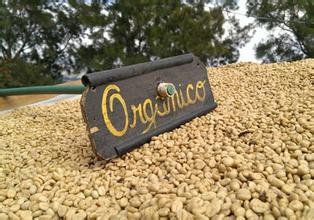
Unique rainforest environment introduction to the treatment of coffee beans in Lake Titicaca, Bolivia
Flavor: dry aromas of roasted nuts and almonds, soft acidity of orange and white pomelo on the palate, sweet caramel on the whole, smooth texture of nut milk, cleanliness and balance. The herbal aroma of Yuyun is also quite attractive. Altitude: 3812m production area: baking degree of Lake Titicaca: moderate baking treatment: washing varieties: iron pickup production

The taste of Bolivian coffee with a bitter taste an introduction to the characteristics of fine coffee in the manor area.
In 1863, rich saltpetre deposits were discovered in Atacama province along the Pacific coast. In 1879, Chile sent troops to occupy the mining area, and Bolivia joined forces with Peru to wage the Pacific War with Chile. Bolivia was defeated in 1883 and ceded the saltpeter-rich Pacific coast to Chile in 1904. Bolivia lost its only coastal province, including the important port of Antofagasta, from

Introduction to the characteristics of coffee bean flavor description price variety producing area in Bolivia and Cameroon
Bolivian boutique coffee Arabica coffee cannot be grown in cold places above 2000 meters above sea level. if the altitude is too high, coffee trees will frost because of low temperatures. So Bolivian coffee is mainly grown in the Yungas region northeast of La Paz. It borders the Amazon basin and is about 1500-2500 meters above sea level with an average annual temperature of about 10-15 ℃. Because of

Introduction to the production area of Bolivian Coffee with rich and unique aroma
Wash Bolivia by hand with a cup of water, it is recommended to use 15 grams of powder at 87 degrees water temperature, ratio of water to powder at 1:15, moderate grinding (small Fuji ghost tooth knife 3.5-4 grinding), V60 filter cup, the first injection of 30g water for 25s steaming, injection to 110g water cut off, waiting for powder bed water to half of the water and then water injection, slow water injection until 230g water, not at the end, extraction time 2fun 00s flavor: roasted nuts and apricot.

Bolivian taste aroma Bolivian coffee type and price
Professional barista exchanges please follow the coffee workshop (Wechat official account cafe_style) Lake Titicaca Copacabana country: Bolivia altitude: 3812m production area: Lake Titicaca roasting degree: moderate baking treatment: washed Lake Titicaca is located on the Coao Plateau on the border between Bolivia and Peru, is the highest and largest light in South America

Overall taste rich Bolivian coffee variety characteristics Taste Manor boutique coffee bean flavor medium
Bolivia is a landlocked country in central South America, bordered by Brazil in the northeast, Paraguay in the southeast, Argentina in the south, Chile in the southwest and Peru in the west. The main terrain is plateau. Bolivia is the highest plateau country in the world, with an average altitude of more than 3000 meters. The capital La Paz is 3660 meters above sea level and is known as the highest capital in the world. Three points in Bolivia

Home-baked boutique coffee (1) Bolivia
It is autumn, and the weather is getting cooler. Autumn is crisp, and the training that has been drilled into the roaster all summer has finally yielded some results before the arrival of this autumn. For baking, it is a touch of the door, and finally a little breath: Oh! It turns out that the baking method can be found out. Compared with the hot summer, it seems that every bean in autumn can impress people with its own unique taste.